
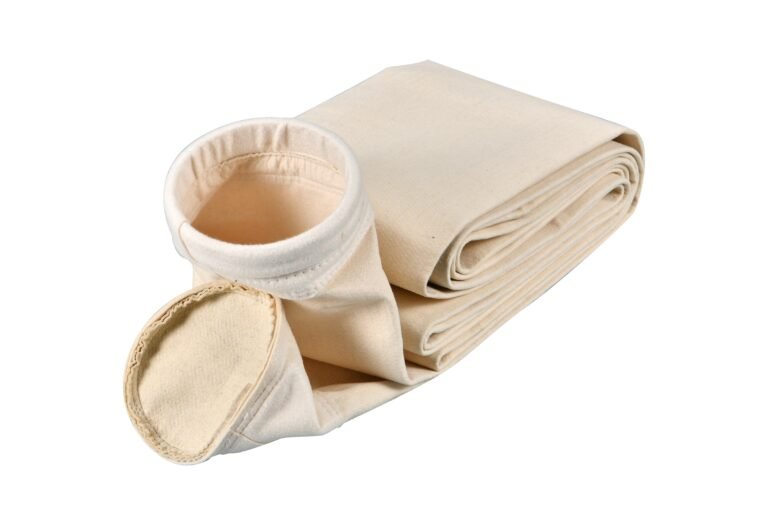
PPS filter bags are widely used in demanding industrial dust collection systems where conventional filter media may not provide sufficient resistance to temperature, chemicals or harsh flue gas conditions.
PPS, also known as polyphenylene sulfide, is commonly selected for baghouse filtration applications that require stable filtration performance under challenging operating conditions. PPS/Ryton filter media, including PTFE-treated versions, is used in industrial boiler and utility filtration applications, while PPS filter bags have also been applied in coal-fired power generation for emissions control.
However, PPS should not be selected simply because an application operates at elevated temperature. Gas composition, moisture, operating temperature, dust characteristics and cleaning method should all be evaluated before determining the correct filter bag material.
Why PPS Filter Bags Are Used in Industrial Dust Collection
The performance of a dust collector depends heavily on matching the filter media to the actual operating environment.
PPS filter bags are generally considered for applications where the filter media must withstand demanding flue gas conditions while maintaining reliable particulate filtration.
Key reasons for selecting PPS filter media include:
- Good chemical resistance in many industrial environments
- Suitability for elevated-temperature dust collection applications
- Stable filtration performance under demanding operating conditions
- Availability with different surface treatments and finishes
- Compatibility with pulse-jet baghouse dust collection systems
- Options for PTFE treatment when additional surface performance is required
PPS/Ryton and PTFE-treated PPS are among the media options offered commercially for industrial baghouse and boiler/utility filtration applications.
The final media specification should always be based on the actual process rather than on the industry name alone.
Main PPS Filter Bag Applications
PPS Filter Bag Applications in Coal-Fired Boilers and Power Generation
Coal-fired boilers are one of the most recognized applications for PPS filtration media.
Combustion processes generate fly ash and fine particulate matter that must be removed from flue gas before discharge. Filter bags used in these systems must operate reliably while being exposed to elevated temperature and chemically demanding gas streams.
PPS-based filter bags have been used in coal-fired power generation, and PPS/Ryton with PTFE is also offered for boiler and utility filtration applications.
For this type of application, filter selection should consider:
- Continuous and peak flue gas temperature
- Dust concentration
- Moisture level
- Gas composition
- Required emission performance
- Cleaning pressure and cleaning frequency
- Baghouse design and air-to-cloth ratio
These parameters have a direct influence on filter media selection and expected service life.
Industrial Boilers and Utility Dust Collection
PPS filter bags can also be considered for industrial boiler and utility baghouse systems where operating conditions require a filter medium with greater chemical and temperature resistance than standard polyester media.
Typical systems may include combustion or process exhaust streams containing fine particulate matter that must be captured before gases are released or sent to downstream treatment equipment.
Because operating conditions vary significantly from one boiler system to another, the existing filter specification should be reviewed before replacing the original bags with PPS.
Important information includes the existing bag material, operating temperature, flue gas composition, bag dimensions and previous service life.
Oil and Gas-Fired Process Applications
Certain oil- and gas-fired industrial processes may also use PPS/Ryton filtration media when the process conditions are compatible with the material.
Donaldson lists PPS/Ryton among its baghouse media options for applications including oil/gas firing, illustrating the use of PPS media beyond coal-fired boiler systems.
Selection should still be based on actual operating data because combustion chemistry, temperature fluctuations and moisture conditions can differ significantly between installations.
Selected Cement, Foundry and High-Temperature Dust Collection Processes
PPS may be considered in selected cement, foundry and other industrial dust collection systems when the temperature and chemical environment are appropriate.
It is important not to assume that PPS is automatically the best material for every cement or metallurgical application. Depending on the process, other media such as aramid, fiberglass, P84 or PTFE-based materials may be more suitable.
The correct choice should therefore be made after comparing:
- Dust characteristics
- Gas temperature
- Chemical exposure
- Moisture
- Required filtration efficiency
- Cleaning system
- Expected filter life
This application-based selection approach is more reliable than choosing filter bags only by industry.
PPS Filter Bags with PTFE Treatment
PPS filter bags can be supplied with different surface treatments depending on the operating environment.
PTFE treatment is one option used in industrial filtration applications. PPS/Ryton with PTFE is specifically offered commercially for boiler and utility filtration systems.
Depending on the filter construction and process requirements, PTFE-related treatments may be considered when improved dust release, surface characteristics or additional protection of the filtration surface is required.
The appropriate treatment should be confirmed according to actual dust and gas conditions rather than specified automatically for every PPS filter bag.
When PPS May Not Be the Best Filter Bag Material
PPS is a high-performance filter material, but no single filter media is suitable for every dust collector.
Before selecting PPS, evaluate:
- Continuous operating temperature
- Maximum temperature excursions
- Gas chemistry
- Moisture and condensation risk
- Oxygen concentration and process conditions
- Dust abrasiveness
- Particle size distribution
- Cleaning method
- Required emission level
- Expected service life
If the operating environment falls outside the suitable range for PPS, another material may provide better reliability and lower total operating cost.
For a broader material comparison, see our guide to choosing filter bag materials for coal and biomass boilers.
For this reason, replacing an existing filter bag solely according to dimensions can be risky. Material selection should be confirmed at the same time as dimensional compatibility.
How to Specify PPS Filter Bags for Replacement
For OEM replacement projects, dimensional accuracy is only one part of the specification.
Before ordering PPS filter bags, buyers should confirm the following information:
- Bag diameter
- Bag length
- Top construction
- Bottom construction
- Existing filter media
- Surface treatment
- Operating temperature
- Maximum temperature
- Dust type
- Gas composition
- Moisture conditions
- Baghouse cleaning method
- Existing bag cage dimensions
- Required quantity
If available, providing the existing filter bag drawing, sample, equipment model or original specification can significantly improve replacement accuracy.
Choosing the Correct PPS Filter Bag Construction
The filter bag construction must also match the dust collector.
Depending on the baghouse design, PPS filter bags may require different:
- Snap band constructions
- Top cuffs
- Bottom discs
- Reinforcement methods
- Stitching materials
- Diameters and lengths
- Surface treatments
The bag must fit correctly with the tube sheet and filter bag cage. Incorrect dimensions or top construction can cause installation problems, leakage, premature wear or poor cleaning performance.
For replacement projects, it is therefore advisable to verify both the filter bag and cage dimensions before production.
Information to Provide When Requesting a PPS Filter Bag Quotation
For a more accurate technical evaluation and quotation, purchasing teams should provide as much operating information as possible.
At minimum, prepare:
Filter Bag Information
- Diameter
- Length
- Top and bottom style
- Existing material
- Surface treatment
- Quantity
Operating Conditions
- Continuous temperature
- Maximum temperature
- Dust type
- Moisture
- Process gas characteristics
Dust Collector Information
- Baghouse type
- Pulse-jet or other cleaning method
- Existing cage dimensions
- Existing bag sample or drawing, if available
This information allows the filter media and construction to be evaluated against the actual operating conditions instead of selecting a bag only by material name.
Conclusion
PPS filter bags are an important filtration option for demanding industrial baghouse applications, particularly in boiler, utility and selected combustion-related dust collection systems. PPS and PPS/PTFE media are commercially used in these types of applications, including coal-fired power generation.
However, the correct PPS filter bag should be selected according to actual operating temperature, gas conditions, dust characteristics, cleaning system and dimensional requirements.
For replacement or custom filter bags, providing the existing bag specifications, dimensions, operating conditions, drawings or samples is the most effective way to confirm a technically suitable replacement before production.