
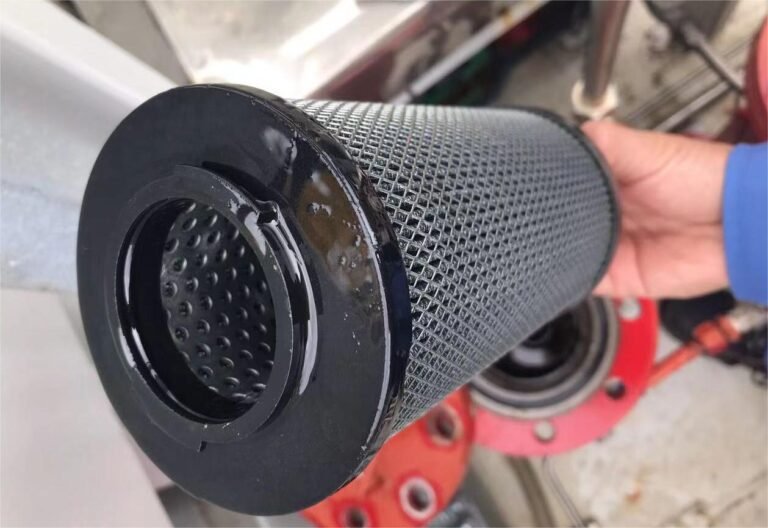
Hydraulic oil filter cartridges play an important role in protecting pumps, valves, cylinders and other sensitive components from particles and contamination in hydraulic and lubrication systems. However, every filter cartridge has a limited dirt-holding capacity. Once the filter becomes excessively clogged, pressure drop increases and system performance may be affected.
Proper hydraulic oil filter cartridge replacement should therefore be based on the actual operating condition of the system, rather than simply replacing the filter at an arbitrary fixed interval.
When Should a Hydraulic Oil Filter Cartridge Be Replaced?
There is no single replacement interval suitable for every hydraulic system. Filter service life depends on contamination level, operating pressure, flow rate, filter media, filtration accuracy, system cleanliness and operating environment.
A hydraulic oil filter cartridge should normally be inspected or replaced when one or more of the following conditions occur:
- The differential pressure indicator reaches the specified replacement limit.
- System pressure drop becomes higher than normal.
- Hydraulic oil flow is restricted.
- The filter bypass valve is frequently activated.
- Oil contamination increases unexpectedly.
- Equipment performance becomes unstable.
- The scheduled maintenance interval specified by the equipment manufacturer is reached.
- Filter media, seals or structural components show visible damage.
For systems equipped with differential pressure indicators, the indicator provides one of the most useful references for determining the actual condition of the filter.
Signs That a Hydraulic Oil Filter Cartridge Is Clogged
A clogged hydraulic filter does not always fail suddenly. In many cases, operating conditions gradually change as contaminants accumulate inside the filter media.
Common warning signs include:
Hydraulic Oil Filter Cartridge Replacement: High Differential Pressure
As contamination builds up in the filter media, resistance to oil flow increases. A rising pressure differential across the filter is therefore one of the clearest indications that the cartridge is approaching the end of its service life.
Reduced Hydraulic System Performance
Restricted oil flow can affect the response and efficiency of hydraulic equipment. Operators may notice slower actuator movement, unstable system operation or reduced production efficiency.
Frequent Bypass Valve Activation
Some hydraulic filter housings incorporate bypass valves to maintain oil flow when the filter becomes excessively restricted. Frequent bypass operation should be investigated because unfiltered oil may circulate through sensitive hydraulic components.
Increased Oil Contamination
If oil cleanliness deteriorates despite normal maintenance, the filter cartridge should be inspected. Damaged filter media, improper sealing or an unsuitable filtration rating may allow contaminants to remain in the hydraulic system.
Factors That Affect Hydraulic Oil Filter Cartridge Service Life
The replacement frequency of a hydraulic oil filter cartridge depends heavily on actual working conditions.
Contamination Level
Systems operating in dusty, dirty or heavy-duty industrial environments normally load filters faster than clean, enclosed systems.
Equipment condition also matters. Wear particles generated by pumps, valves, cylinders and other components can increase the contamination load inside the hydraulic circuit.
Filtration Accuracy
A finer micron rating captures smaller particles but may also accumulate contamination more quickly when used in a heavily contaminated system.
The filtration rating should therefore be selected according to the cleanliness requirements of the equipment rather than simply choosing the finest available filter.
Filter Media
Common hydraulic filter media include fiberglass, cellulose, synthetic media and stainless steel mesh.
Different media provide different filtration efficiency, dirt-holding capacity, pressure resistance and compatibility with operating fluids. Selecting the correct media helps achieve a better balance between filtration performance and service life.
Flow Rate and Operating Pressure
A replacement cartridge must be suitable for the designed flow rate and pressure conditions of the hydraulic system.
Incorrect sizing or construction can create excessive pressure drop and shorten filter service life.
Oil Temperature and Fluid Compatibility
Operating temperature and hydraulic fluid type can affect filter media, adhesives and sealing materials.
Seal materials such as NBR, FKM and other elastomers should be selected according to the hydraulic fluid and operating temperature.
How Often Should Hydraulic Filters Be Replaced?
Hydraulic filters should not be replaced according to a universal number of operating hours.
The appropriate maintenance interval should be determined using a combination of:
- Equipment manufacturer recommendations
- Differential pressure indication
- Oil cleanliness analysis
- Operating hours
- Equipment duty cycle
- Environmental contamination
- Previous filter service history
For critical hydraulic systems, condition-based maintenance is generally more reliable than replacing cartridges solely according to calendar time.
Keeping records of filter replacement dates, differential pressure and oil analysis results can also help maintenance teams establish a more accurate service interval for each machine.
How to Choose the Correct Replacement Hydraulic Oil Filter Cartridge
Replacing a clogged filter with an incorrect cartridge can create new problems. Before ordering a replacement, verify the following specifications:
- Outside diameter
- Inside diameter
- Overall length
- Micron rating
- Filtration efficiency
- Filter media
- Maximum operating pressure
- Required flow rate
- End-cap configuration
- Inner core construction
- Seal material
- Operating temperature
- Hydraulic fluid compatibility
For OEM replacement projects, the original part number is particularly useful. If the part number is unavailable, technical drawings, dimensions, photographs or physical samples can also be used to identify a suitable replacement.For additional selection guidance, see our industrial filter cartridge selection guide.
Why Correct Hydraulic Oil Filter Cartridge Replacement Matters
Timely replacement helps maintain oil cleanliness and protects critical hydraulic components against abrasive particles and contamination.
An appropriate replacement cartridge can help:
- Protect pumps, valves and cylinders
- Maintain stable hydraulic oil flow
- Reduce abnormal pressure drop
- Minimize contamination-related component wear
- Reduce unexpected equipment downtime
- Extend hydraulic oil and equipment service life
- Improve overall maintenance reliability
At the same time, replacing filters too frequently without considering actual contamination conditions can increase unnecessary maintenance costs. The goal is therefore not simply frequent replacement, but replacement at the correct time with the correct filter cartridge.
Choosing an OEM Replacement Hydraulic Oil Filter Cartridge
When replacing an existing hydraulic filter cartridge, compatibility should be verified before purchase.
We can manufacture OEM replacement hydraulic oil filter cartridges according to part numbers, drawings, dimensions, samples and operating specifications, with options including fiberglass, cellulose, synthetic media and stainless steel mesh.
For faster technical evaluation, provide as much of the following information as possible:
- Existing filter brand and part number
- Cartridge dimensions
- Required micron rating
- Hydraulic fluid type
- Operating pressure
- Flow rate
- Operating temperature
- Application or equipment type
These details allow the replacement cartridge to be matched more accurately to the existing hydraulic filtration system.
Conclusion
Hydraulic oil filter cartridge replacement should be determined by system condition, differential pressure, contamination level and equipment maintenance requirements rather than by an arbitrary fixed interval.
Monitoring filter condition and selecting a properly matched replacement cartridge helps maintain hydraulic system reliability, protect expensive components and reduce unnecessary downtime.
For OEM replacement requirements, providing the existing part number, dimensions or technical specifications is the most effective way to confirm compatibility before ordering.